
Most people don’t think about their wisdom teeth until one of them starts throbbing at 2 am. If you’re reading this because a dull ache at the back of your jaw has turned into something you can’t ignore, or just want to be informed so you can stay ahead of emergencies, you’re not alone.
Let’s walk through what’s actually happening in your mouth, what “disimpaction” means in plain language, and what to expect if your dentist recommends it.
What does “impacted” actually mean?
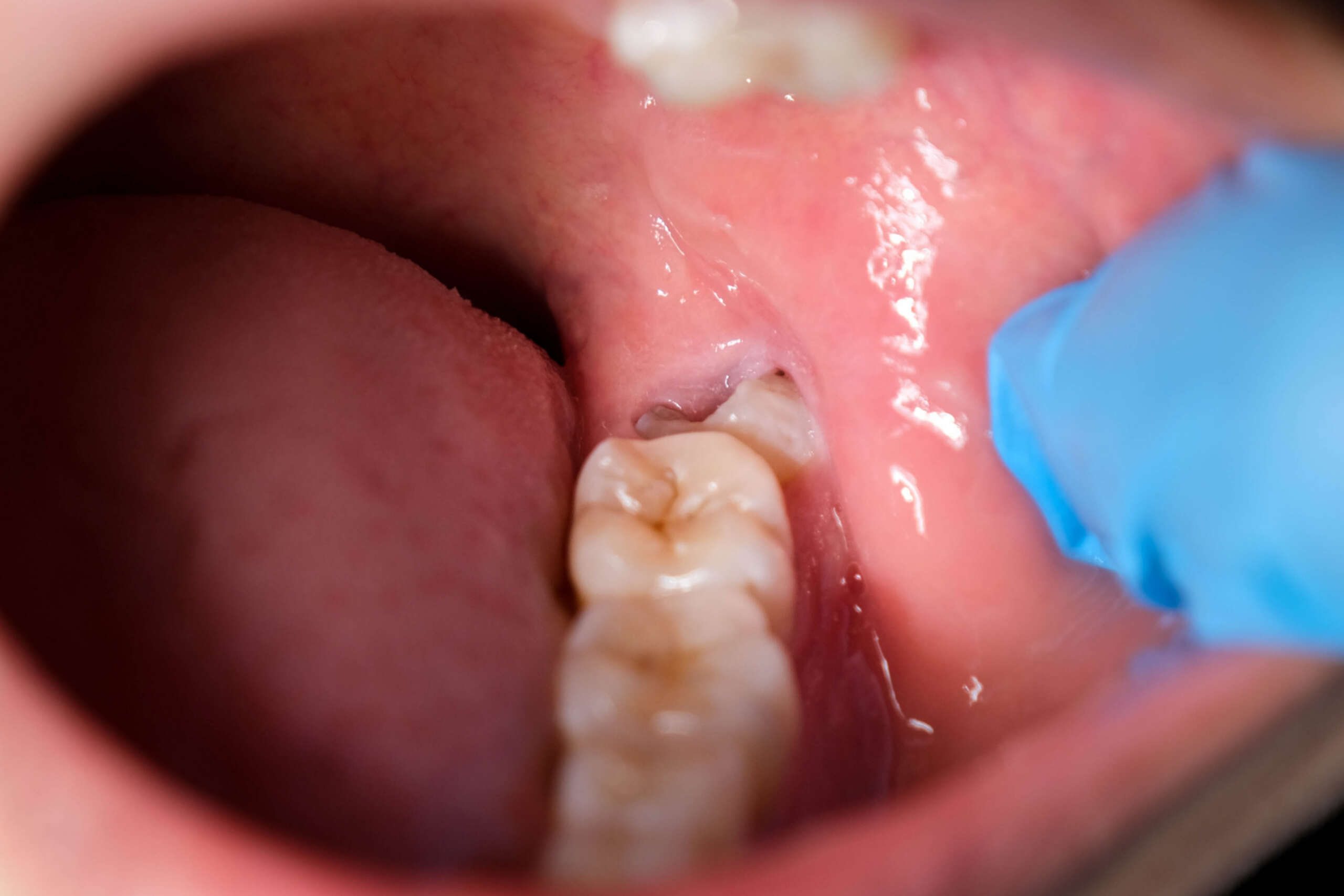
For many of us, our jaws were shaped to fit a smaller set of teeth than most of us grow. Wisdom teeth (the third molars right at the back) are often the ones that lose out on space. When a tooth can’t fully push through the gum because it’s angled against the neighbouring molar, trapped under bone, or only partially erupted, we call it impacted.
There are a few patterns we see on X-ray:
- Mesial impaction
The tooth is tilted forward into the molar next to it (the most common pattern we see in our Westlands patients). - Vertical impaction
The tooth is upright but simply doesn’t have room to break through fully. - Horizontal impaction
The tooth is lying on its side, pressing directly into the root of the tooth in front. - Soft tissue impaction
The tooth has broken through the bone but is still trapped under a flap of gum, which is exactly the kind of spot food and bacteria love to hide in.
So what is disimpaction, exactly?
Disimpaction is simply the surgical process of freeing and removing an impacted tooth. Depending on the angle and depth, this can mean:
- Making a small opening in the gum if the tooth is fully under soft tissue.
- Removing a sliver of bone if the tooth is blocked by it.
- Sectioning the tooth into two or three pieces so each piece can be lifted out through a smaller space. This is often what makes recovery gentler than people expect, because it avoids forcing a large tooth through a small opening.
- Closing the site with dissolvable stitches where needed.
We understand it may sound more dramatic than it feels. Done under local anaesthesia, patients typically describe pressure and vibration, not pain, during the procedure itself.
Signs your wisdom tooth might need attention
Wisdom tooth trouble rarely shows up as one dramatic symptom. It’s usually a pattern that builds over weeks or months:
- A dull ache at the very back of the jaw that comes and goes, often worse when you’re tired or run down
- Swelling or tenderness in the gum behind your last molar
- Difficulty opening your mouth fully, or jaw stiffness in the morning
- A bad taste or smell that seems to come from one specific spot
- Pain that seems to radiate toward your ear on one side
- Food that constantly gets trapped in the same spot no matter how carefully you brush
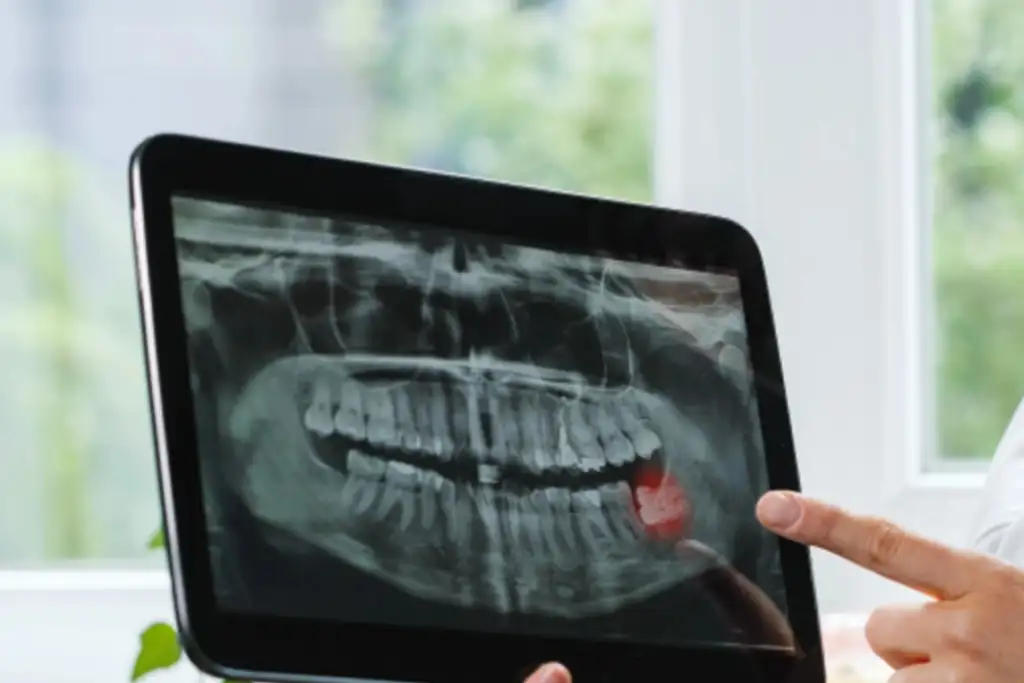
If any of this sounds familiar, it’s worth getting an X-ray rather than waiting it out. These flare-ups tend to return more frequently and more intensely over time, not less.
Do all impacted wisdom teeth need to come out?
Honestly, no. Some impacted wisdom teeth sit quietly for years without causing problems, and we don’t believe in removing teeth just because they’re there. What tips the decision toward removal is usually one or more of:
- Recurring infection or swelling (what we call pericoronitis) around the tooth
- Visible decay on the wisdom tooth or the molar next to it, which is hard to treat once a tooth is partially buried
- A cyst is forming around the impacted tooth. This is something only an X-ray will catch early
- Crowding or pressure that’s shifting your other teeth
- Gum disease pockets forming specifically around that back tooth
This is why we always start with dental imaging rather than a decision made on symptoms alone. Your jaw tells a more complete story than the pain does.
What recovery actually looks like
This is the part patients ask about most, so let’s be specific:
Day 1–2: Some swelling and tenderness, manageable with the painkillers we prescribe. Cold foods (think mashed potato, yoghurt, soft porridge) are your friend. Avoid straws completely because the suction can dislodge the healing clot.
Day 3–5: Swelling usually peaks around day 2–3, then starts easing. Most people are comfortable enough to return to desk-based work by day 3 or 4, sometimes sooner for simpler extractions.
Day 7–10: Any stitches (if non-dissolvable) are typically removed, and for more deeply impacted teeth, this is usually when things feel fully settled.
Weeks to months after: The bone underneath continues to fill in and remodel quietly in the background. This doesn’t affect your daily life at all. It’s simply your body finishing the job.
A quick aftercare checklist we give every patient
- Bite gently on the gauze we give you for 30–45 minutes to help the clot form
- Avoid rinsing, spitting hard, or using a straw for the first 24 hours
- From day 2, rinse gently with warm salt water after meals
- Stick to soft, cool foods for the first two to three days
- Take painkillers on schedule rather than waiting for pain to build up
- Avoid smoking or alcohol until your dentist gives the go-ahead. Why? Both slow healing significantly
When to call us urgently
Mild swelling and discomfort for the first few days is expected. Reach out to us the same day if you notice:
- Bleeding that hasn’t slowed after several hours
- Fever, or swelling that’s getting worse after day 3 instead of better
- Numbness in the lip or chin that persists beyond the expected anaesthesia window
- A foul taste alongside worsening pain, which can signal infection or a dry socket
Read: Transparent and Affordable Dental Treatment Prices
An impacted wisdom tooth is one of those things that’s easy to ignore until it isn’t. What we need you to embrace is that modern disimpaction techniques are far gentler than what most people picture when they hear “wisdom tooth surgery,” and recovery for the vast majority of our patients is measured in days, not weeks.
If you’ve been living with that nagging ache at the back of your jaw, the most useful next step is simply a checkup and an X-ray. It takes minutes and gives us (and you) a real answer instead of a guess.
Not sure if your wisdom tooth needs attention?
Book an assessment with the Nutri Health Solutions dental team. We are happy to support your wellbeing with clarity, from start to finish.
Read Also: Why regular dental cleaning is crucial for your holistic wellbeing